Espresso Power


Go to any corner coffee shop, ask for an Americano, Cappuccino, Latte or whatever your feeling like. The attendant will begin the very ordinary and standard process of preparing and then extracting the liquid gold ingredient that is the base of all of these warm beverages -  COFFEE!


But why is the Espresso the base of our most popular drinks? After all, it is a relatively new method for brewing coffee. The are so many other choices such as Pour Over V60, Chemex, Cafetiere etc.
Also I must iron out some major misconceptions with such drinks in the Espresso world (but I'll chew on the bit a little longer).

First plot twist - there is no such thing as an 'expresso'. I know, mind blown.

History time:
The traditional Espresso drink didn't really reach world-wide fame until 1948. Before this big outbreak there is a small past to this unexpected market dominator.
Driven purely by commercial needs for a better, more consistent and quicker way to brew coffee, an inventor patented the first steam powered coffee machine back in 1884. His name was Angelo Moriondo but unfortunately he didn't develop it further. Then another Italian named Luigi Bezzera introduced many improvements in 1901.
Ever since then, the Espresso machine has evolved further and further. Now with a sprinkle of 21st century technology and some very scientific approaches to brewing an Espresso we have achieved where we are now.


So what are you actually asking for when you ask for a Espresso or for a Espresso based drink?
The Espresso is so simple.
Very hot water is forced through ground coffee under pressure to create a small but thick, textured and intensely flavoured drink. That's all it is. The reason why you get such a bolder and hitting taste is because the huge amounts of pressure force the flavour locked in the ground coffee through to your cup.


The many variables in this brewing method make it interesting and challenging for Baristas. The smallest change can have a profound effect on the quality of the drink. So what are the main variables?

Grind size (dependent on the individual bean)
Coffee amount (17-19g)
Water temperature (91-96C)
Overall extraction time 22-30 seconds


Ok, it sounds a lot of effort to go to for every single Espresso shot but this is why we go to specialty coffee shops because they literally do this for every drink they make, because they understand the importance of each part and the effect it has on the taste and experience. A good Barista will have their machine fine tuned so it is ready to extract the perfect shot time after time.


I could go on all day about the differences between our most popular everyday Espresso based drinks but I don't want to bore you. I will however quickly cover the main ones and bust some rather incorrect myths made by the big coffee companies.


Above is the most simple and straight forward way to see the differences from a Latte to a Flat White and so on. Compare this to what you may find at your nearest Starbucks and I would say there are a lot of differences. But, hey, this is how they have moulded their marketing ideas around it.


One perfect example, if you were to walk into a specialty coffee shop and ask for a Macchiato you will get an Espresso with a small dosing of milk foam presented on top of the crema. Now walk into Starbucks ask for the same thing and you will basically receive a Latte with a shot of caramel syrup in. I mean come on! You couldn't be further from the truth if you tried! Ok sorry rant over. So be aware people and know your drinks people!

Until next time, thanks for reading.
SHARE:

Is Coffee Sustainable?


Now it's probably not something you have ever thought about when you are taking a sip from your Vanilla Latte, but with huge corporations grinding through thousands of tons of coffee each day, can the ever-increasing demand be sustained for the consumer, me and you?  


The logical answer to higher demand would be to grow more to keep up with the increasing coffee addicts. However this may not actually be possible. This is especially more concerning for the specialty coffee sector.

Coffee is notoriously tricky to produce. The plant is rather picky with its surroundings in order 'to create the cherry we later take the bean from. You may think its not an issue for us living now, but it is. The area in which coffee trees can be grown is shrinking. Rapidly. 

Many factors influence the level of quality and development of flavour characteristics in the coffee bean; from the climate, altitude, type of soil and species and variety of coffee tree through to the harvesting and processing of the ripe beans. Ok, maybe I'm losing you a bit but its so important to understand the complexities that affect the final outcome. 

So here is an overview of the different areas that contribute to the coffee trees' growth and flavour. 


Climate and microclimate:
Hot regions, broadly around the Equator, are where coffee trees originated from although this doesn't mean the hotter the climate the better. If the area is too hot then the plants are weakened, resulting in reduced production and becoming more susceptible to pests and diseases. At the other extreme, coffee is not frost tolerant. If the temperature dips to low it results in total loss of crop.   

Rainfall is also a very important element. Arabica beans require around 1500-2500mm of rain distribution over a period of nine months. This triggers the flowering of the plant (yes it is this precise!). Rain is then needed throughout the growing season as the cherries develop. As well as the rain there is a need for dry season. This is during the three months of the year when the cherries are harvested and dried. 

Are you begining to see the difficulties that the farmers are faced with? Try finding an area which has plenty of rain fall, but not too much. Is a hot climate but not too hot and has a three month period of total dryness? Nothing springs to mind right. Oh and I haven't even mentioned the altitude dilemma yet! 


Altitude:
Generally higher altitudes give coffee the superior flavour. Coffee trees thrive in tropical climates. However the vigorous growth creates greater quantity but the bounty will lack flavour. In cooler conditions the coffee tree grows slower which results in more prominent flavours. In mountainous regions, around 1200-2000m above sea level it remains cooler. The trees mature slowly and the beans are more dense which concentrate sugars, organic acids and other bits of goodness. 


So I hope you can appreciate the complexities in this single part of the long road the coffee beans take before ending up in your coffee cup. Now back to my original question. Is it sustainable? 

Climate change is coffee's biggest enemy. That's right I said it. Everyone buy a electric vehicle and stop breathing to reduce CO2. Ok maybe that is a exaggeration. But this is a real issue.

The Arabica bean as we know and love it has very narrow tolerances for temperature and rainfall. The rain needs to come at particular times of the year, during flowering and cherry development and not after the harvest period when the farmers are drying the crop. As  I said earlier temperatures that increase above what the coffee tree can handle makes them susceptible to pests and disease.

A science team from the Royal Botanic Gardens researched into the affect of climate change and created a computer modelling analysis that projected a reduction in land suitable for wild Arabica coffee forests in Ethiopia of between 85% and 99.7% as soon as 2080! This is a substantial reduction in land where the farmers can grow. This is real life and it is happening now. 

So next time you step into a specialty coffee shop and wonder why the price is slightly higher than your local cafe it's because the farmers are being treated fairer and rewarded greater for their increasingly difficult job. 


Thank you for reading.     


SHARE:

Coffee Reviews: Joy Coffee

Is coffee joyful? Or is coffee used as a vehicle to create joy?

We spend endless hours conversing, meeting new people, creating our life fantasies in coffee shops, drinking our favourite beverages. So in a sense you could say it is the vehicle. But that vehicle has to be a worthy companion to transport you to your next destination.

This is why coffee is joyful. It creates the joy we seek.


This batch of coffee is roasted by a true coffee master, Matthew Deyn. Starting his coffee journey at just 15 in his home town of Lincoln, with work experience at Starbucks before moving down to London to study music, when he became ever more fascinated and interested in independent coffee.

At 18 he landed a job at Notes Music and Coffee in Covent Garden. The whole London scene became his catalyst for becoming more mindful of flavour, skill and the craftsmanship of being a barista. Its safe to say he was hooked. He has been a part of the UK Barista Championships and Aeropress Competitions before taking his knowledge and experience to Melbourne Australia where he travelled and worked as a barista.

He has also experienced the coffee scenes in San Francisco and Portland because he knew "there was more to discover!" Over in the States is where his broader awareness amongst consumers for speciality coffee in those places helped to give him purpose for working within the industry once he returned back to Lincoln at 21.


After, learning some more in the art of roasting he moved on to setting up Wheelys Cafe, a speciality coffee bike which was perfect for the people in central Lincoln.
Matt Started Roasting with Nicaraguan La Samaria from Falcon Coffees and began roasting in his kitchen with a Gene Cafe. But now has plans for the future roasting for a local company.  

As you can see Matt is a passionate guy when it comes to coffee. It is clear he is a true people person after talking to him for only a short time. Coffee has certainly provided him with some amazing experiences one of which is to be very proud off. Matt was selected as a Re:Co fellow this year in Budapest. Re:Co is a prestigious event that gathers all the greatest minds and most influential thinkers in the coffee industry to look at challenges and opportunities the speciality coffee industry has.
If you haven't already realised, this is a very big deal. 


So with a introduction like that I'm sure you are thinking I sure hope the coffee meets up to the expectations! It certainly does.

Joy Coffee, Matt explains to me why he has called it this.
   "for me Joy is the final achievement. A feeling of connection with those around you and it is also in memory of my Grandma who passed away when I was little"

The batch I received was a Kenyan bean roasted within 2 days of receiving it. It is called Tano Ndogo and was produced by 3 brothers and 2 neighbours in the Nyeri district. The name Tano Ndogo means 'small five' in Swahili to represent the five founding members. 
This coffee also won fifth place in the East Africa taste of Harvest completion this year! 

I decided to use two methods of brewing to compare the differences you can get through them. I used my espresso machine and a AeroPress. The AeroPress was very generously given to me by a very good friend, so thanks Kieren!  


The initial smell I got from the bag was very sweet and fresh. So with a freshly cleaned boiler and grinder I got to it with my Sage espresso machine. The first extraction was slightly fast and low on pressure so I adjusted the grind size accordingly to get a much thicker and richer espresso shot.


Instantly there were lovely sweet notes to the flavor. The espresso emphasised the lemon and tangyness of the bean in the after taste. The body of the coffee has a positive liqueur/caramel hint to it, although this is very faint and overpowered by the sweetness. From my experience Kenyan beans are predominantly known for their distinct sweet gestures and this portrays a perfect example!


Next up Aero Press method. Now I'm sure if Matt had seen me using this brewing method on his coffee he would have had a few tips to give me. Nevertheless, with my limited experience, I still managed to make a great coffee. The Aero Press is a completely different method to make your coffee. It is a much more conventional and raw way to extract the flavors. I think a whole stand-alone blog could be require for that though.


Anyway, this has got to be the preferred way to drink this type of coffee. Its has a much lighter impact but it is consistent right through the whole glassmaking it a pleasure to drink with no bitterness or sharp tastes. The sweet notes of strawberry are better experienced and you get hints of floral left in the back of your throat.


I would like to thank Matt for trusting me with reviewing his personally roasted beans! He really knows his stuff and he is another fantastic ambassador to the specialty coffee industry.

Thank you for reading guys, until next time...  


SHARE:

Coffee Tours: Liverpool


Somewhere in between renovating a house, marathon training, working shifts, writing reports, oh and giving the odd bit of time to my lovely girlfriend, I managed to get over to Liverpool with Sophie as my coffee companion for my second coffee tour.

Who said men can't multi-task?

Liverpool isn't really known for its coffee community. However, I felt the need to go explore it and see what there is to offer. After receiving my own copy of  the 'Northern Independent Coffee Guide' there were three particular shops I wanted to visit.
So lets get underway.


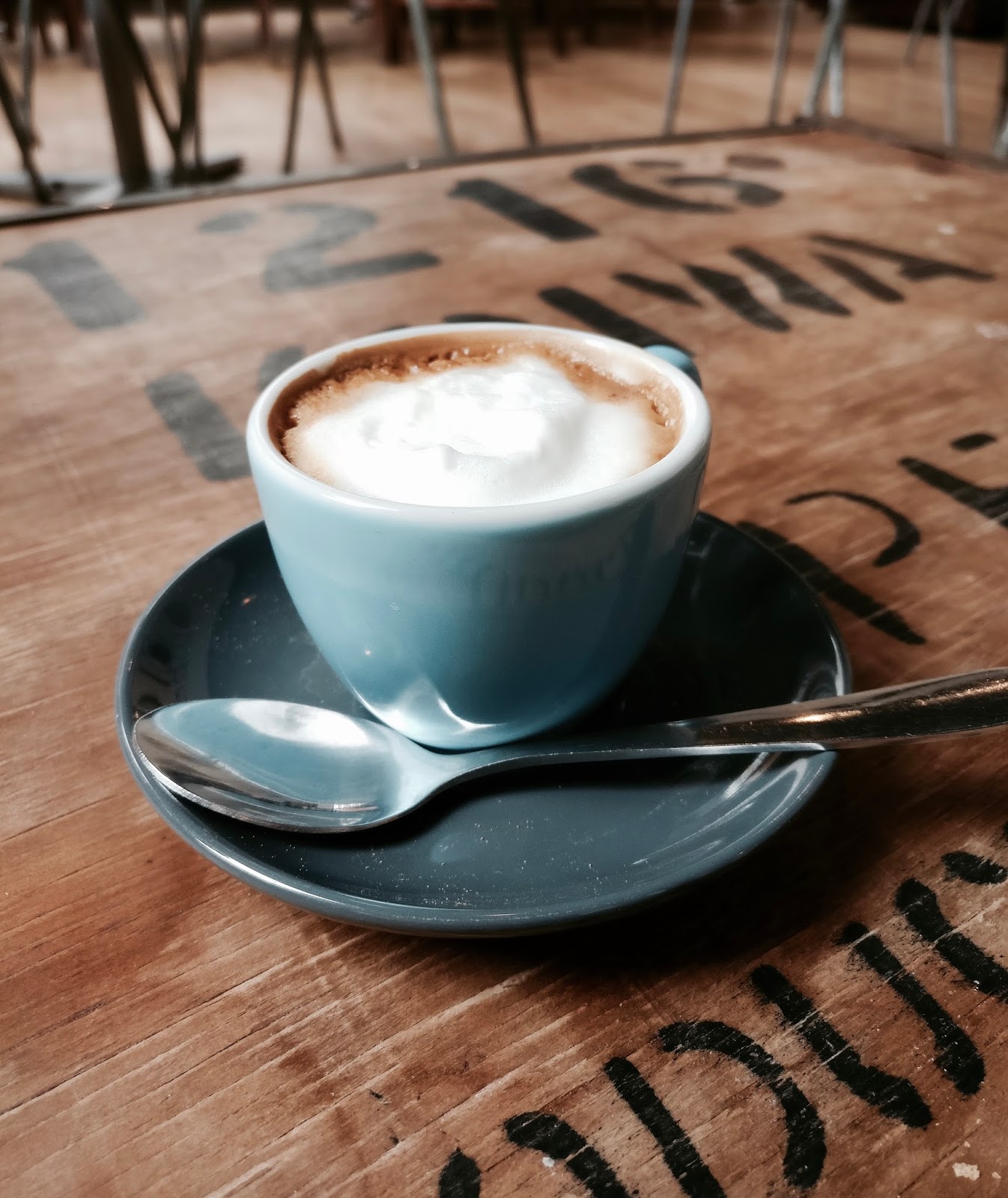
First on our agenda, Root Coffee. No more than a 2 minute jaunt from Liverpool 1 you will find Root Coffee snugly placed below Premier Inn just off Hanover Street. Sleek glass exterior, with an open and airy seating arrangement inside. The continuous bold counter covered with colourful wood to give you that traditional feel. You will find crates from the Liverpool Marina used as coffee tables to keep you in the sense that you are in Liverpool and that it is part of this shop.
It was a great atmosphere which was finished off with French music although Siri had no idea who the artist was, typical.


The coffee was very smooth and wonderfully balanced. Both myself and Soph went for our favourite drink. The flat white. Fantastically strong flavor from the coffee, leaving a dark chocolatey taste in the mouth.


After a short walk not far from Liverpool 1 you will come to Bold Street Coffee. Expressed as one of the originals in Liverpool for independent coffee in my book so we had to visit.


It has a rustic exterior look with a very unique Banksy themed art work next to their window.
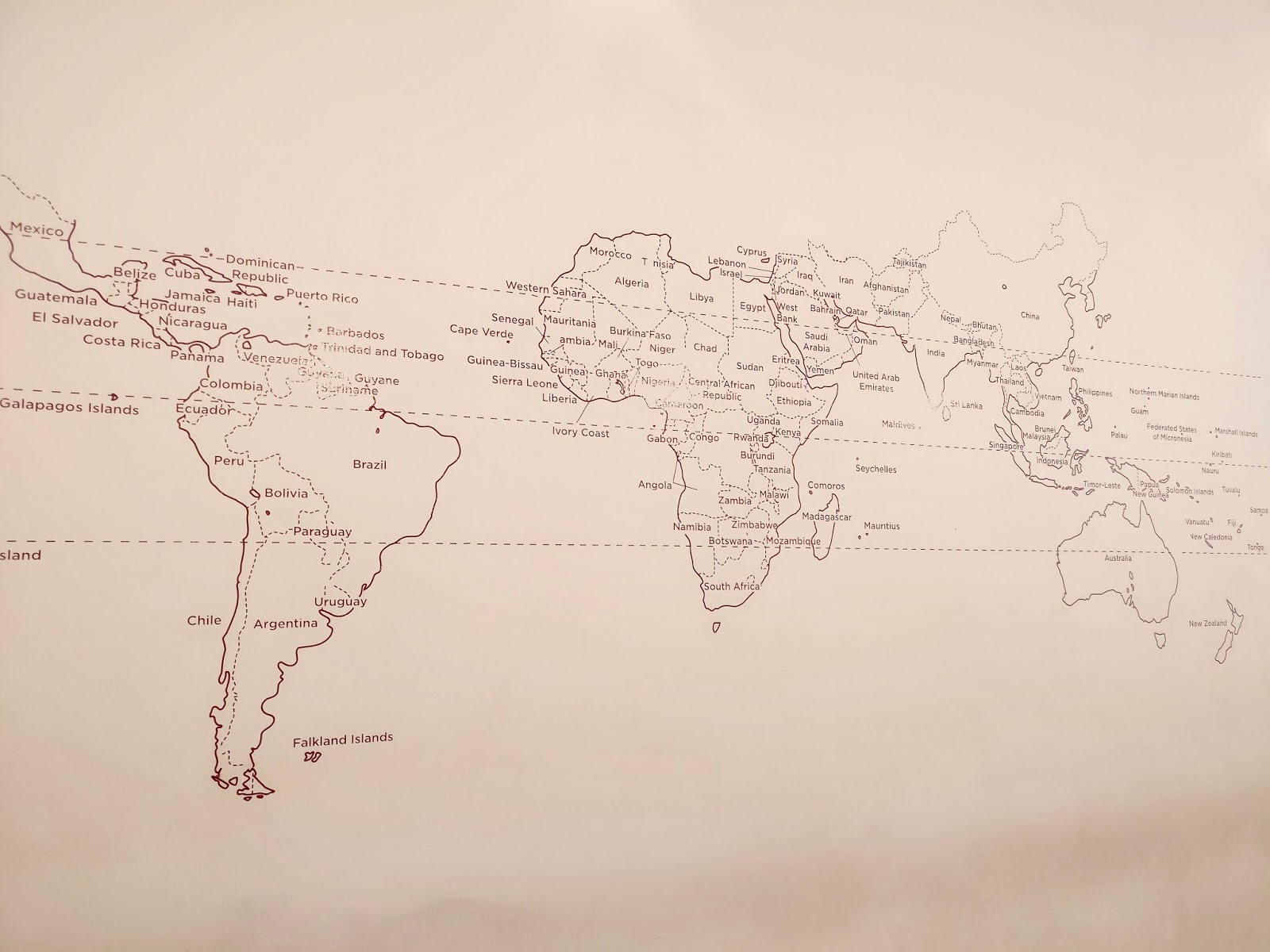
Inside, everything was lined with oak which kept the place bright and gave it a quality feel. There is a huge world map on the wall opposite the counter which shows you the very important coffee band (which is reducing all the time, damn climate change!).


They have a La Marzocco PB machine which is always a winner. However I opted to go for an Aeropress brew method with their seasonal Kenyan beans. Deliciously sweet and fruity. It was a pleasant change from the usual espresso blends.


On to our last coffee house which is called 92 Degrees, also another long-stander in Liverpool's Coffee history. This time we had a good 20 minute walk out of the centre towards the theatre area. A fairly modest and subtle outside, nothing to shout about, but inside is what they focused on.


Inside it's almost like walking into a gallery with huge paintings hanging from all the walls. Long top to bottom windows filled the gaps in between the artwork which flooded the area with light.


It was a just a macchiato for our final stop in the tour because by now I was brimming with caffeine. Like always one more never harmed anyway. It wasn't my favorite espresso, harsh on the flavour but some people enjoy that. Hey, who am I to judge?


Once again my coffee explorations were a success and the specialty coffee shops never disappoint. It doesn't matter where you go, the ambiance, character and quality this community projects is expressed throughout. You have satisfied my coffee addiction and given me a boost for the drive home.


Thanks for reading! Life is crazy at the moment. So bear with me all is in hand (or six).          
SHARE:

Coffee Reviews: Tchibo


Possibly one of the biggest and oldest companies in the coffee industry haven't just dipped their toe in the water of roasting specialty coffee, rather they have anchored their boat quite firmly in the middle of it.


Small history lesson, bear with me...  In 1949 - Two young men Max Herz and Carl Tchilling (maybe there is a connection somewhere along the line? Tchilling - Shillings? Ok maybe not) lay the foundation for today’s Tchibo Group. They started out with the business idea of sending roasted coffee to customers by mail. Who would have thought that would be the norm some 66 years later?
In 1955 came the first Tchibo coffee shop and from there the endless services were born.


So why do you need to know this? You don't. However consider yourself to have learnt something new today. You never know you may see a Tchibo logo on your travels, once you see one you will never miss another. Like all in the specialty coffee industry, Tchibo have seen that people want good quality coffee. You can see it everywhere by the surge of new specialty coffee shops. 

So many have had their coffee fix from Starbucks and Costa and now crave quality, more flavoursome and vibrant coffee to drag themselves from the squinty eyed, maungy state we find ourselves in on a morning and this is exactly what Tchibo want to give us.


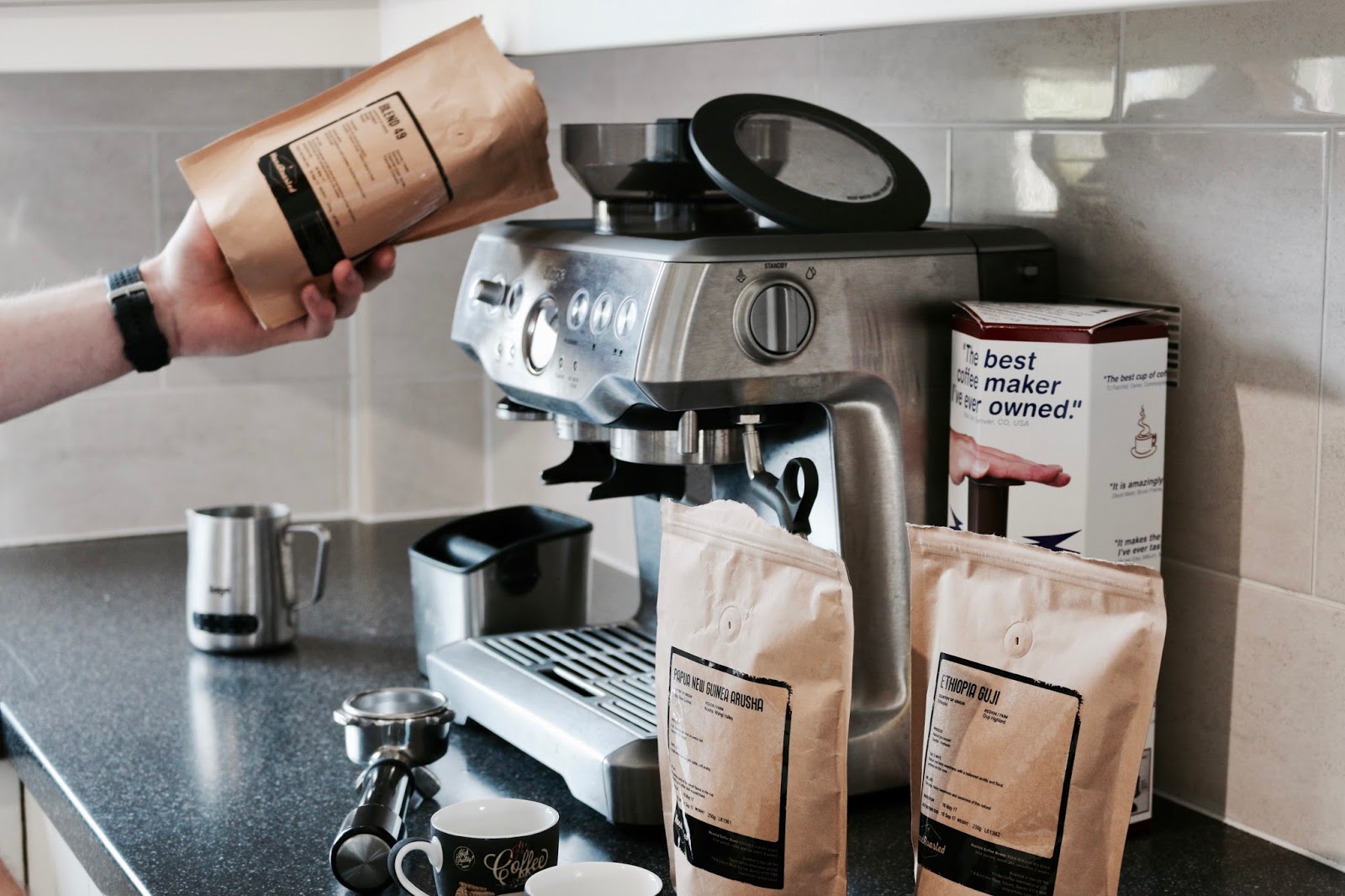
Earlier this year the birth of the Hand Roasted Collection by Tchibo was brought to us. The good people at Tchibo sent me a bag of each flavor from the first batch of the Hand Roasted Collection! So I indulged my taste buds with their three different batches, Blend 49, Ethiopia Guji and Papua New Guinea Arusha.       


Now where to begin?

Starting with - Blend 49. Once I had measured my serving, I had small 'drop mic' episode for getting the extraction pressure and time to extract on first time using my Sage. Yes I am that sad.
I was met with a thick, creamy crema and an instant nutty toasted aroma which was pleasant and not too harsh on the senses. This soon transferred to my taste buds where I experienced an almost cocoa note. A great full bodied espresso with not too much over-powering acidity. Once cooled slightly this is when I experienced the slight buttery mouth feel.
Although a lighter roast, it would suit milk based drinks.


Next a light roast - Ethiopia Guji. With many Ethiopian beans the bursting scents of fruitiness and sweetness was vivid. After the refreshing aroma that tempts you to take a sip you are met with a mature berry taste full of flavour! This style of beans never disappoint to surprise me of how different coffee can taste. A really light but balanced espresso. I may have to try this with my new AeroPress. (Many thanks to a very generous supporter!)


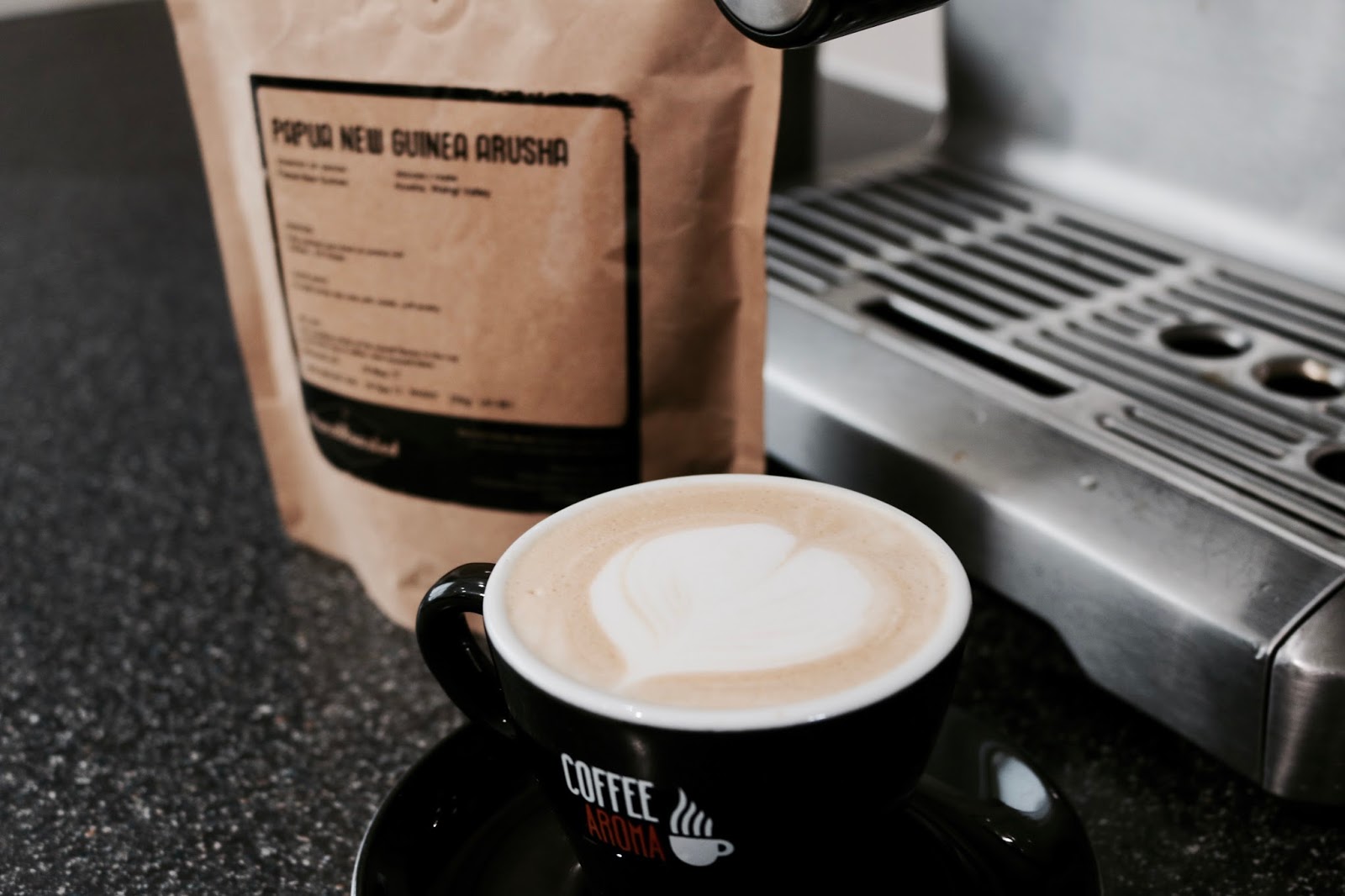
Last up a bold dark roast - Papa New Guinea. Once extracted it was clear this has the strong caffeine injection for that morning pick me up (or brunch/midday or early afternoon/evening - just all the time really). On initial sip you get the powerful dark chocolate note which is then followed by a surprisingly light lemony after-taste.This coffee would be perfect served as a flat white or, if you’re in a hurry, a macchiato!

You shouldn't take my word for the quality of these beans just try them yourself. 


As I have just been told a fresh batch of Hand Roasted Collection coffee has been roasted! 


I would like to thank the good people of Tchibo for letting me try these packs from their first batch of roasting! I have thoroughly enjoyed getting involved.   


I have so many blogs planned I just need to get my head into gear (or just fill it with coffee) and get on with them!  

Thanks for reading.    


SHARE:
BLOGGER TEMPLATE DESIGNED BY pipdig